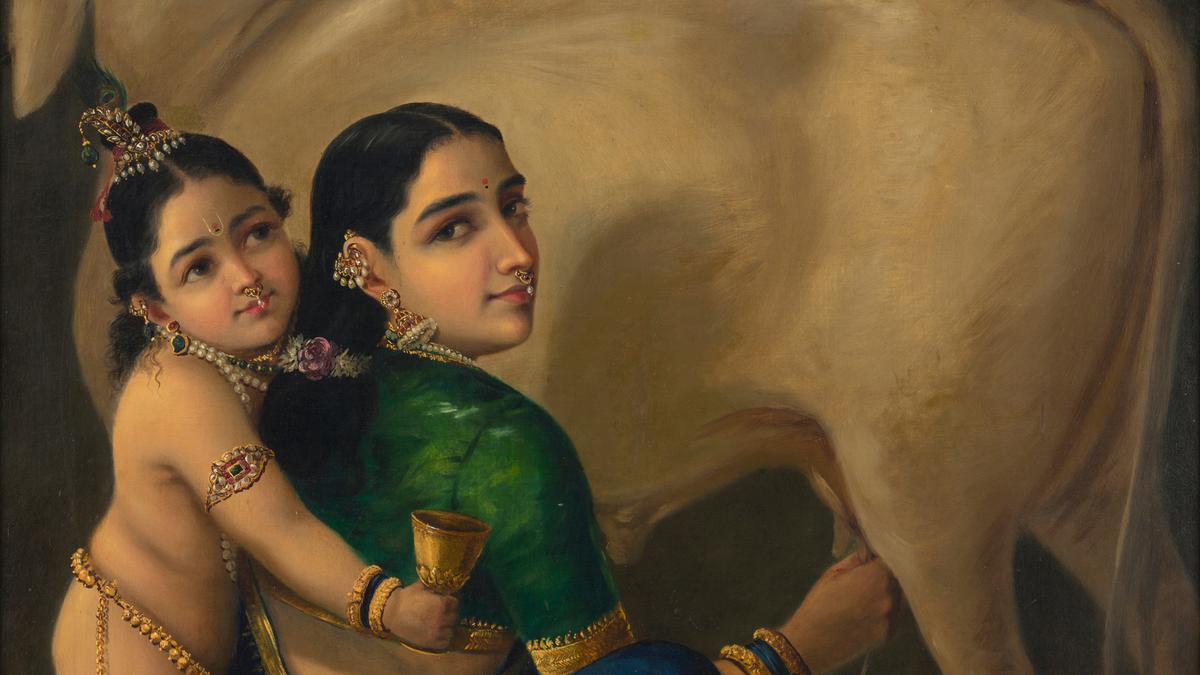
- Raja Ravi Varma’s Yashoda and Krishna, captures the scene of Shrimad Bhagavatam and is popular as the “Mona Lisa of Indian art”.
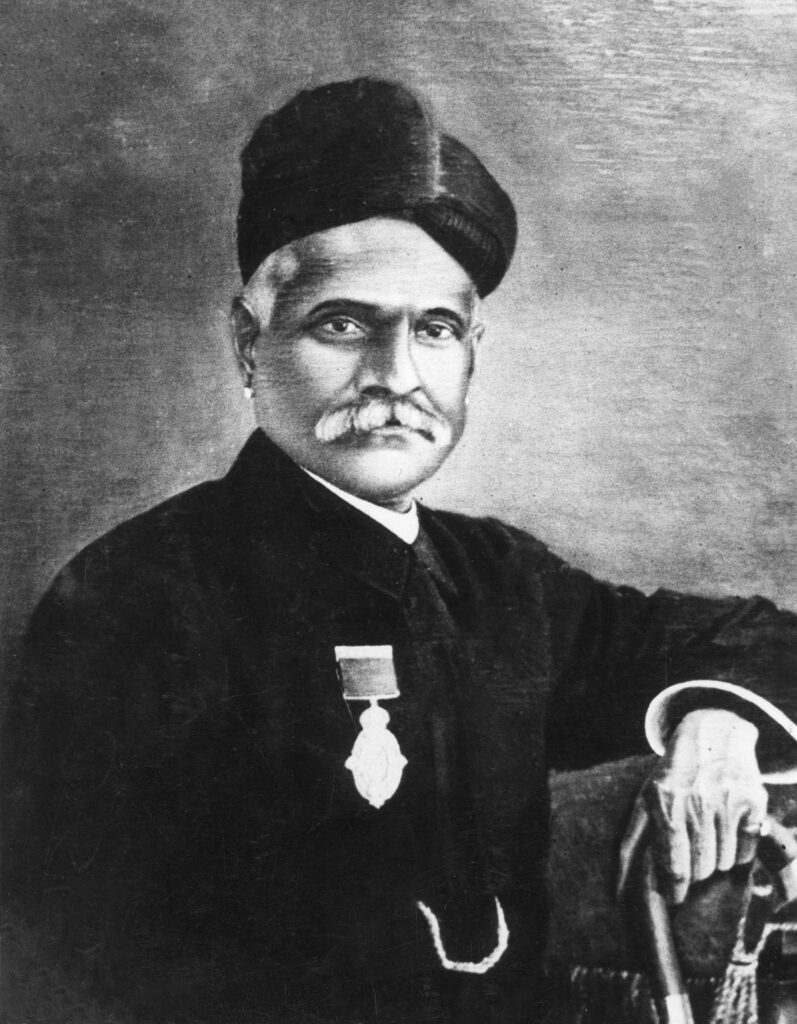
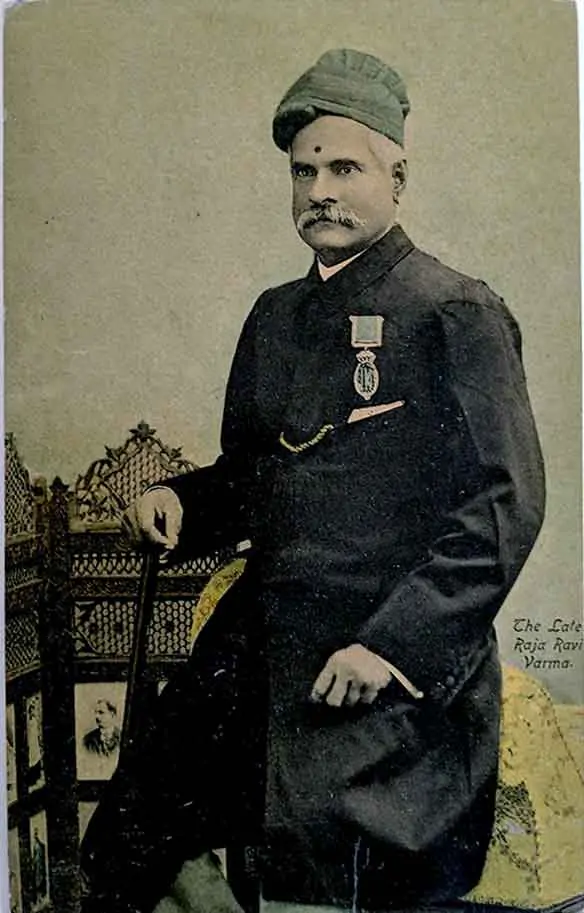
- Often referred to as the father of modern Indian art, Raja Ravi Varma is widely known for his realistic portrayal of Indian gods and goddesses. While he mainly painted for the royalty, he is also credited with bringing art to the masses through his prints and oleographs (prints meant to mimic the texture and look of oil paintings).
- Raja Ravi Varma was born in April 1848 in modern-day, Kerala, to a family very close to the royal family of Travancore. At a young age, he would draw animals and everyday scenes on the walls in indigenous colours made from natural materials such as leaves, flowers and soil.
- His uncle, Raja Raja Varma, noticed this and encouraged his talent. Patronised by Ayilyam Thirunal, the then ruler of Travancore, he learnt watercolour painting from the royal painter Ramaswamy Naidu, and later trained in oil painting from Dutch artist Theodore Jensen.
- Varma became a much sought-after artist for the aristocrats and was commissioned to paint several portraits in the late 19th century. He travelled across India extensively, for work and inspiration.
- Depicting Indian culture, Varma borrowed from episodes of the Mahabharata and the Ramayana. He also received patronage from numerous other rulers, including the Maharaja of Mysore and the Maharaja of Udaipur.
- As his popularity soared, the artist won an award for an exhibition of his paintings in Vienna in 1873. He was also awarded three gold medals at the World’s Columbian Exposition in Chicago in 1893.
- Believed to have made more than 7,000 paintings before his death at the age of 58 in 1906, Varma combined European realism with Indian sensibilities. While he travelled to find his subjects, painting the Indian royals and aristocrats, his inspiration came from varied sources — from Indian literature to dance drama.
- Much of his celebrated art also borrows heavily from Indian mythology. In fact, he is often credited with defining the images of Indian gods and goddesses through his relatable and more realistic portrayals, often painted with humans as models. The depictions include Lakshmi as the goddess of wealth, Saraswati as the goddess of knowledge and wisdom, and Lord Vishnu with his consorts, Maya and Lakshmi.
- Raja Ravi Varma aspired to take his art to the masses and the intent led him to open a Lithographic Press in Bombay in 1894. Varma, chose to establish a printing press of his own. The first picture printed at Varma’s press was reportedly The Birth of Shakuntala, followed by numerous mythological figures and saints such as Adi Shankaracharya.
- The popularity of the prints, in fact, continued till modern times, with Varma’s style acting as inspiration for artists who illustrated the popular comic book series, Amar Chitra Katha.