
Context:
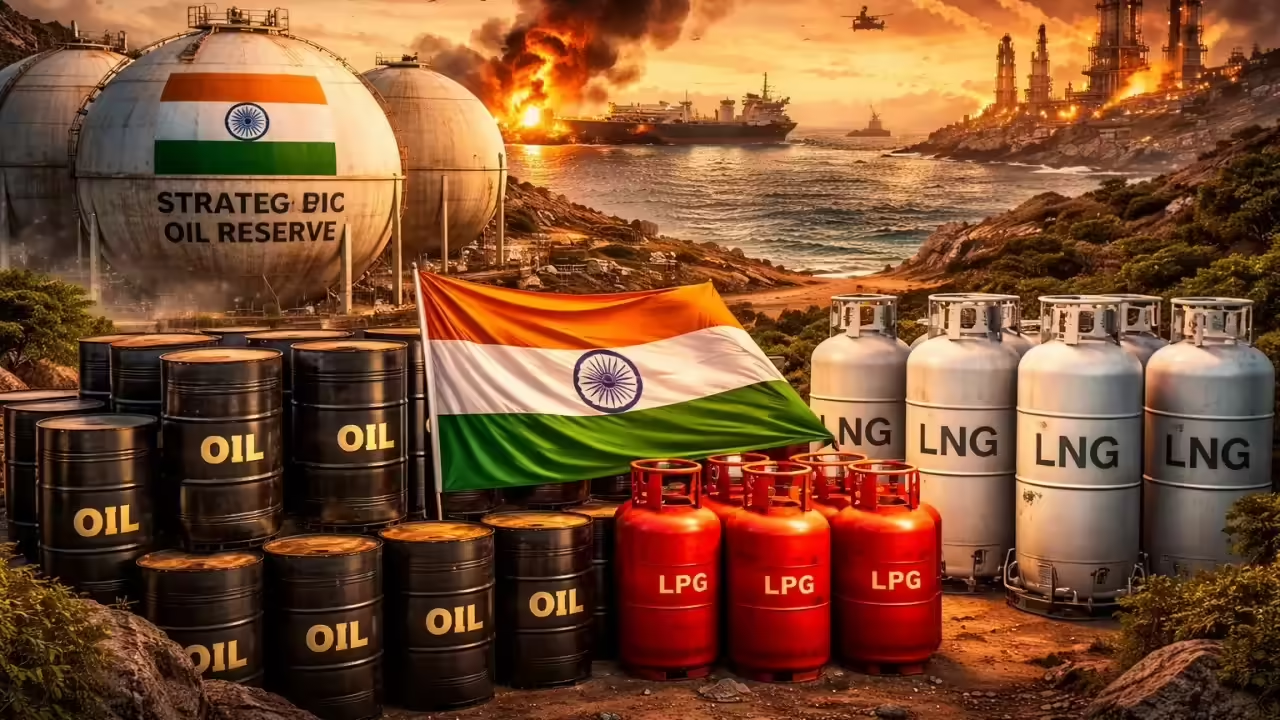
The closure of the Strait of Hormuz due to the West Asia war has triggered a severe energy crisis in India. While crude oil and Natural Gas (LNG) are affected, Liquefied Petroleum Gas (LPG) has emerged as the most critical vulnerability for Indian households.
LPG Crisis the Biggest Worry:
- India imports about 60 percent of LPG, with 90 percent of imports routed through the Strait, causing around 54 percent supply disruption.
- LNG imports meet about 50 percent of demand, with 30 percent effective supply disruption.
- Government has reduced supplies to industrial and commercial sectors to prioritize households.
- Push towards shifting LPG users to PNG where pipeline infrastructure exists.
Broader Impact:
- Highlights vulnerability of India’s energy security to geopolitical chokepoints.
- LPG disruption directly impacts household welfare due to its widespread use for cooking.
- Rising energy costs and shortages may contribute to inflationary pressures.
- Industrial output may slow due to reduced fuel availability.
Regulatory Measures:
- Prioritization of LPG supply to domestic consumers over commercial users.
- Ensuring uninterrupted PNG and CNG supply to households and transport sector.
- Policy push to expand PNG network in urban areas.
- Efforts to diversify energy sources and strengthen supply chains.
LPG vs. LNG: A Comparison of Vulnerability
While both are gases, their supply chains and impact on the Indian economy differ:
| Feature | LPG (Liquefied Petroleum Gas) | LNG (Liquefied Natural Gas) |
| Composition | Propane & Butane | Methane (Natural Gas) |
| Import Dependency | 60% | 50% |
| Sourced via Hormuz | 90% | 55–60% |
| Total Supply Hit | 54% | 30% |
| Storage/Delivery | Bottled in cylinders; easy to move. | Cryogenic (-160°C); needs pipelines. |
| Consumer Base | 33.3 Crore (Universal) | 1.5 Crore (Mostly Urban) |
Key Differences:
- LPG (The “Portable” Fuel): A byproduct of oil refining. It turns liquid under moderate pressure. Its portability makes it the lifeline for rural India where pipelines don’t exist.
- LNG (The “Industrial” Fuel): Natural gas cooled to a liquid state for sea transport. Once it hits Indian shores, it is re-gasified and sent through pipelines as PNG (for homes) or CNG (for cars).
Challenges:
- Heavy reliance on imports, especially through a single critical maritime route.
- Limited pipeline infrastructure restricting PNG expansion in rural areas.
- Storage limitations for LNG and logistical constraints for LPG distribution.
- Exposure to global price volatility and geopolitical risks.
-
INDIA ENERGY SECURITY RISKS FROM LPG AND LNG SUPPLY DISRUPTIONS
Context: The closure of the Strait of Hormuz due to the West Asia war has triggered a severe energy crisis in India. While crude oil and Natural Gas (LNG) are affected, Liquefied Petroleum Gas (LPG) has emerged as the most …