
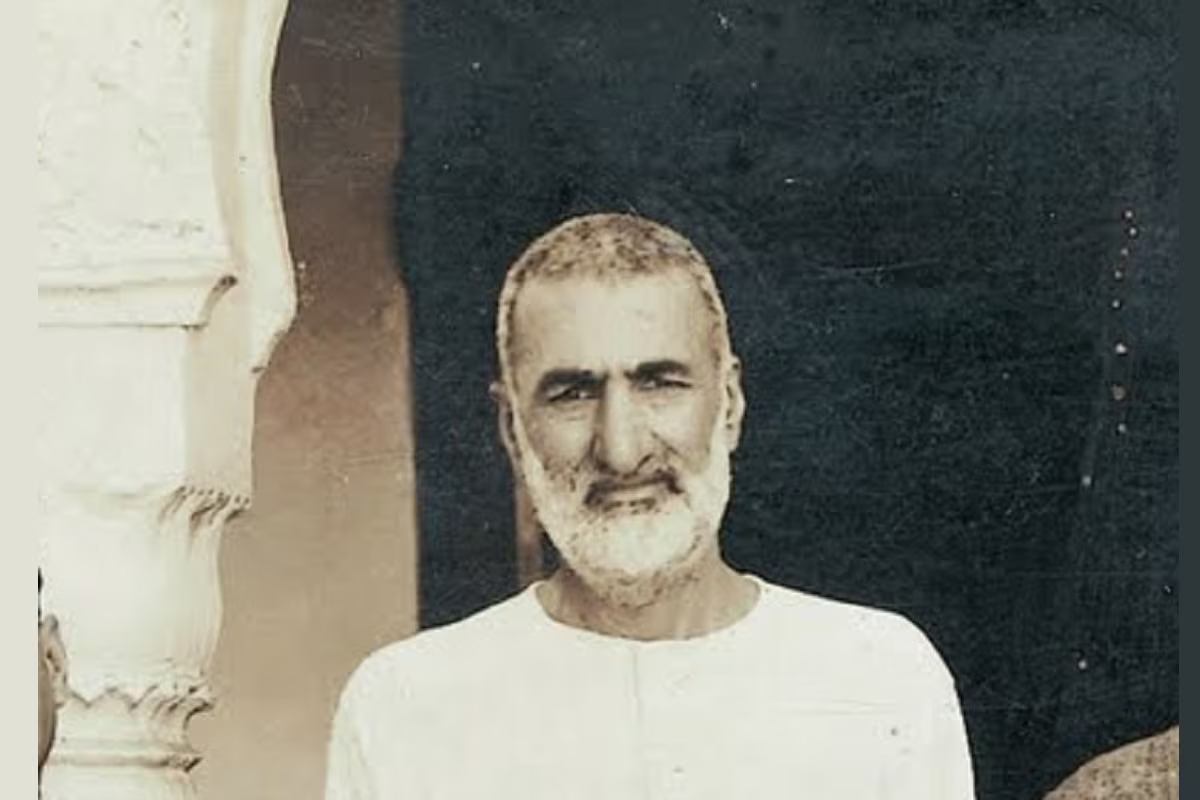
Khan Abdul Ghaffar Khan, popularly known as Frontier Gandhi and Badshah Khan, passed away on 20 January 1988.
Why he is remembered
- A towering leader of the Indian freedom struggle, especially from the North-West Frontier Province (present-day Khyber Pakhtunkhwa)
- Founder of the Khudai Khidmatgar (Servants of God) movement, based on non-violence, discipline, and social reform
- A close associate of Mahatma Gandhi, he proved that non-violence was not confined to any one region, religion, or culture
- Dedicated his life to Pashtun social reform, education, communal harmony, and resistance to colonial rule
Key contributions
- Mobilised Pashtun society against British rule through non-violent mass movements
- Promoted education, women’s empowerment, and social equality
- Opposed Partition on principled grounds, advocating unity and peaceful coexistence
- Spent nearly 30 years in prisons under British and later Pakistani authorities
Legacy
- Awarded Bharat Ratna (1987) — India’s highest civilian award
- Symbol of moral courage, non-violence, and civil resistance
- His life remains a powerful reminder that ethical means are as important as political ends
🕊️ On his death anniversary, Khan Abdul Ghaffar Khan is remembered as a conscience-keeper of the freedom movement and a global icon of non-violent struggle.