
CONTEXT:
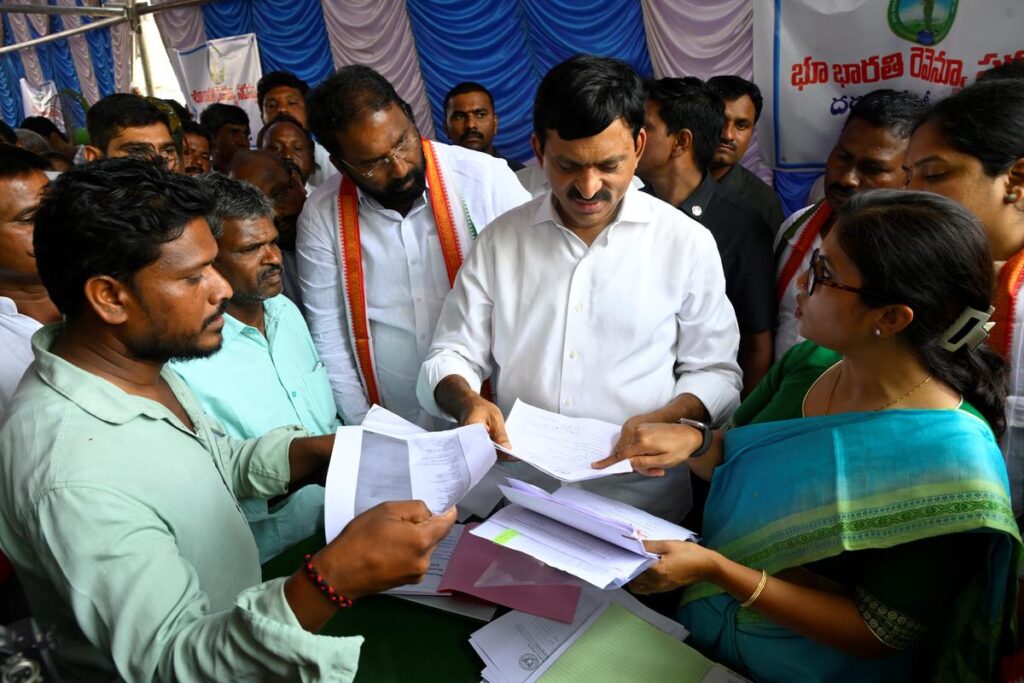
Between April and June 2025, Telangana held 10,725 Revenue Sadassulu (revenue meetings) across 593 mandals, through which 8.58 lakh land dispute applications were received.

Key phases:
- April 17–30: 12,000 applications
- May 5: 46,000 applications
- June 3–20: 8 lakh applications collected.
• Over 3.27 lakh applications have been digitally uploaded so far.
• District-level data: Khammam (67k), Bhadradri Kothagudem (61k), Warangal (54k), Bhupalpally (48k), Nalgonda (42k).
Why It Matters:
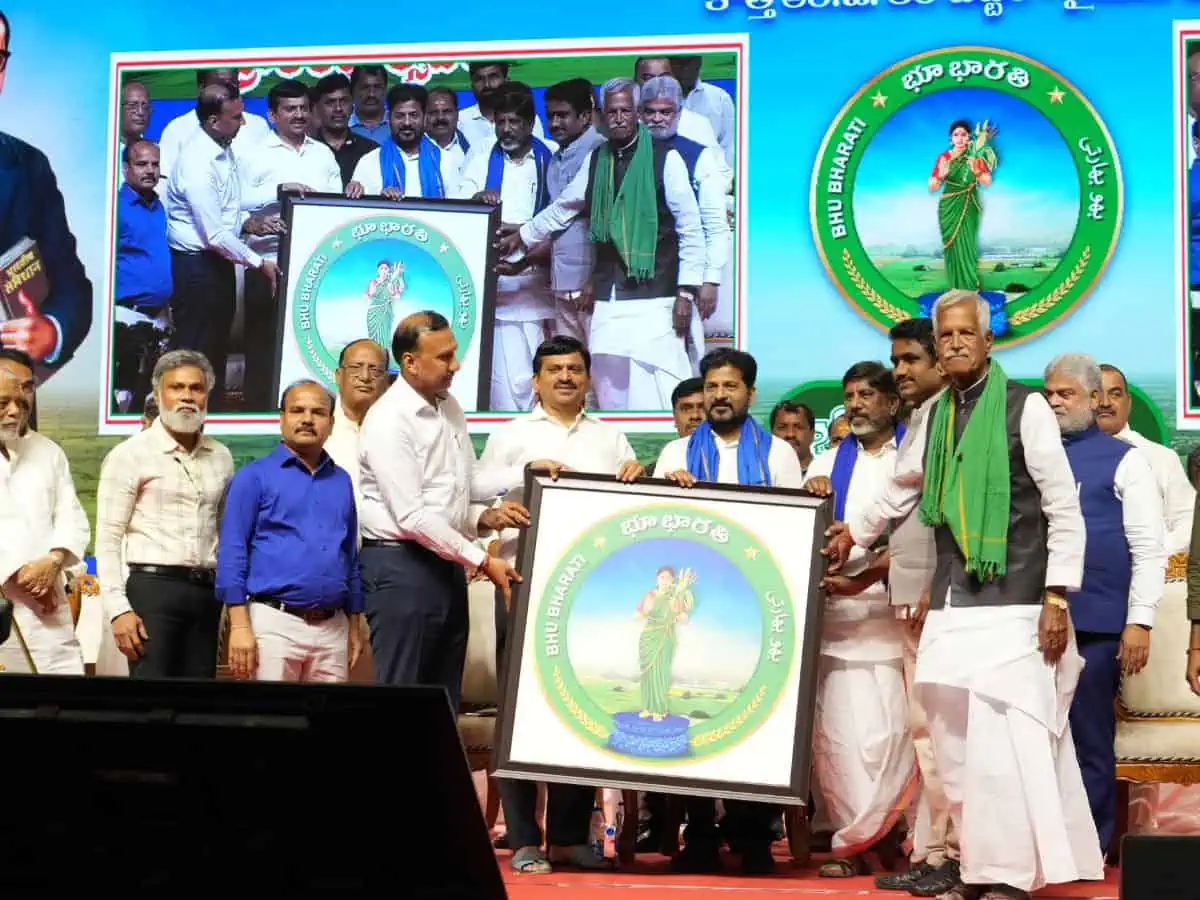
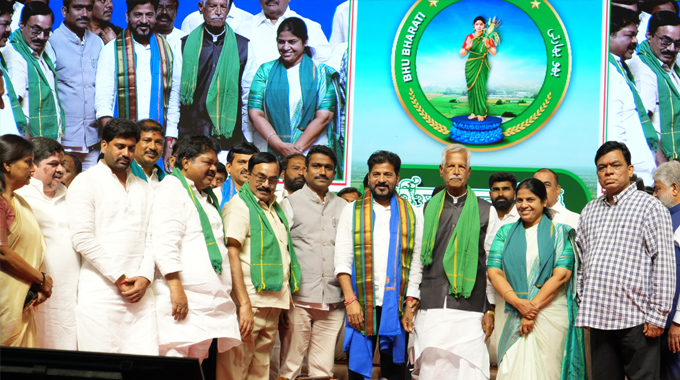
- Under the Bhu Bharati Act, this initiative replaces the flawed Dharani land system, aiming to enhance land record accuracy, transparency, and farmer confidence.
- Active outreach through doorstep grievance collection, free application kits, and digitization shows administrative responsiveness.
- The target is to resolve pending cases by August 15, with encouragement from pilot surveys and robust monitoring.
Benefits to Farmers:
Clarifies land titles and corrects errors (survey mismatches, Sada Bainama disputes).
• Accelerates issuance of land documents and reduces legal disputes.
• Strengthens overall land governance and fiscal accountability.
Land Reforms in India:
| 1. Zamindari Abolition (Late 1940s–1950s) | Timeline: Started in Uttar Pradesh in 1951, then adopted by most states by mid-1950s. Laws: U.P. Zamindari Abolition and Land Reforms Act, 1951; similar laws in Bihar, Madhya Pradesh, etc. Objective: To eliminate intermediaries (zamindars) and transfer ownership rights to actual cultivators. Impact: Around 20 million tenants benefited, but compensation to zamindars and loopholes in land records limited its success. |
| 2. Tenancy Regulation (1950s–1970s) | Timeline: Major reforms began in the 1950s, strengthened during the 1960s–70s under the 5-Year Plans. Key Acts: Various state laws like Bombay Tenancy and Agricultural Lands Act (1948), West Bengal Land Reforms Act (1955). Provisions: Regulation of rent (usually fixed at 1/4th or 1/5th of produce). Security of tenure—protection from arbitrary eviction. In some states, eventual ownership rights were granted to tenants (e.g., Operation Barga in West Bengal, 1978). Impact: Improved tenant rights in some states, but implementation was uneven. |
| 3. Ceiling on Land Holdings (1960s–1970s) | First Phase: Based on recommendations of the Kumarappa Committee (1949). Second Phase: Revised limits under National Guidelines of 1972, as part of Indira Gandhi’s 20-Point Programme (1975). • Laws: Varied by state, e.g., Andhra Pradesh Land Reforms (Ceiling on Agricultural Holdings) Act, 1973. • Ceiling Limits: Typically, 10–54 acres, depending on land type and irrigation. • Objective: Redistribute surplus land to the landless poor and reduce inequality. • Outcome: Out of ~3 million acres declared surplus, only ~2.2 million acres were redistributed due to delays, litigation, and loopholes |
| 4. Land Consolidation (1950s–ongoing) | • Major Push: Initiated during the First Five-Year Plan (1951–56). • Objective: Consolidate fragmented and scattered landholdings into single contiguous plots. • Key States: Successfully implemented in Punjab, Haryana, Uttar Pradesh, and parts of Gujarat. Benefits: o Increased productivity by facilitating modern agriculture. o Reduced boundary disputes and land loss in bunds. • Challenges: Resistance from farmers, poor records, and lack of political will in some regions. |
New Age Reforms:
o Dharani Portal (Telangana) aimed to centralize land records but faced criticism for excluding tribal and informal landholders.
o Bhu Bharati Act (2024–25) introduced as a more inclusive alternative—focus on field verification, public hearings, and error correction.
- E-Governance in Land Administration
• Importance of Digital Land Records Modernization Programme (DILRMP).
• Tools like: GIS-based surveys, digitized cadastral maps, mutation tracking, and online grievance redressal.
• Benefits: Improved land tenure security, transparency, citizen trust, and investment facilitation in agriculture.
For More info Visit: https://bhubharati.telangana.gov.in/Bhubharati_about