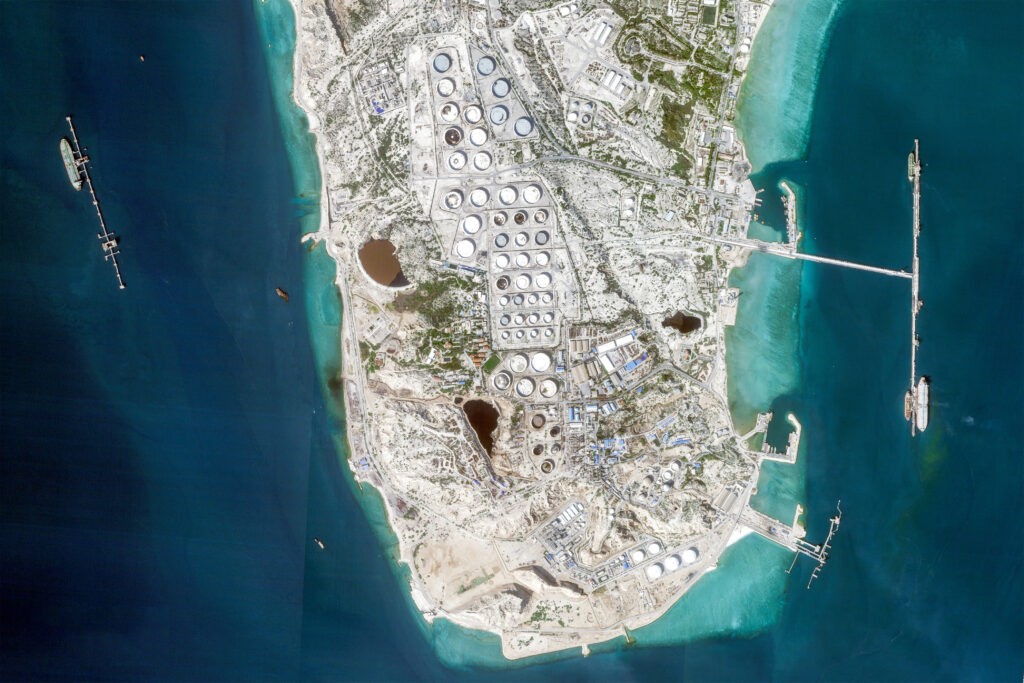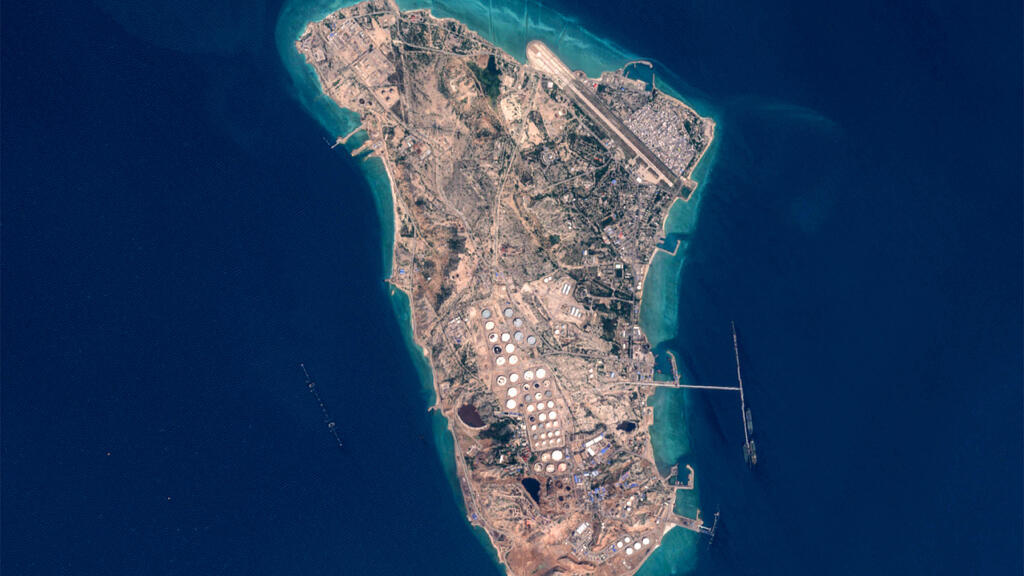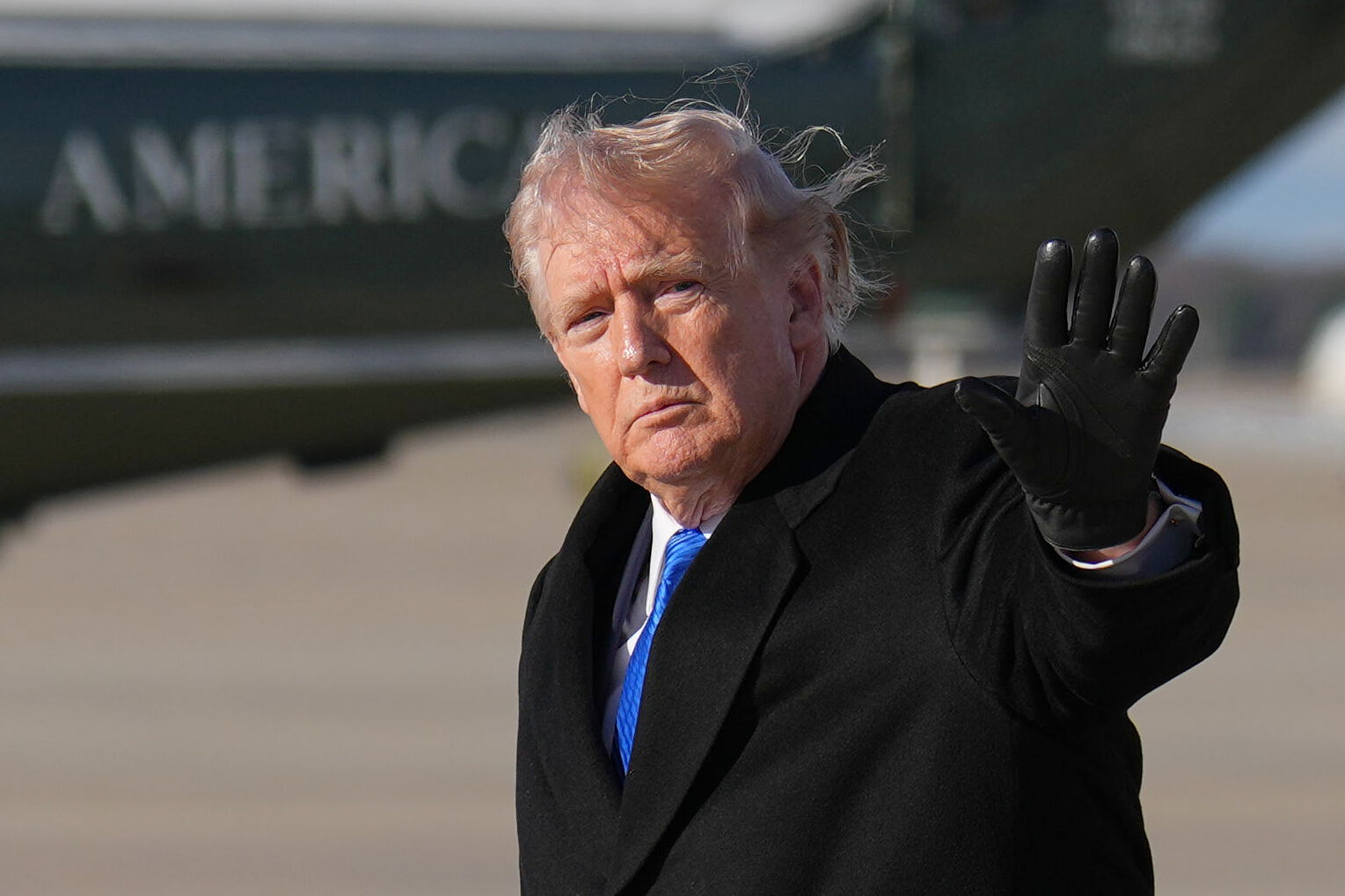
US President Donald Trump threatened Monday to destroy Iran’s Kharg Island, a crude oil export hub, along with oil wells and power plants unless Tehran quickly accepted a deal to end the US-Israeli war.
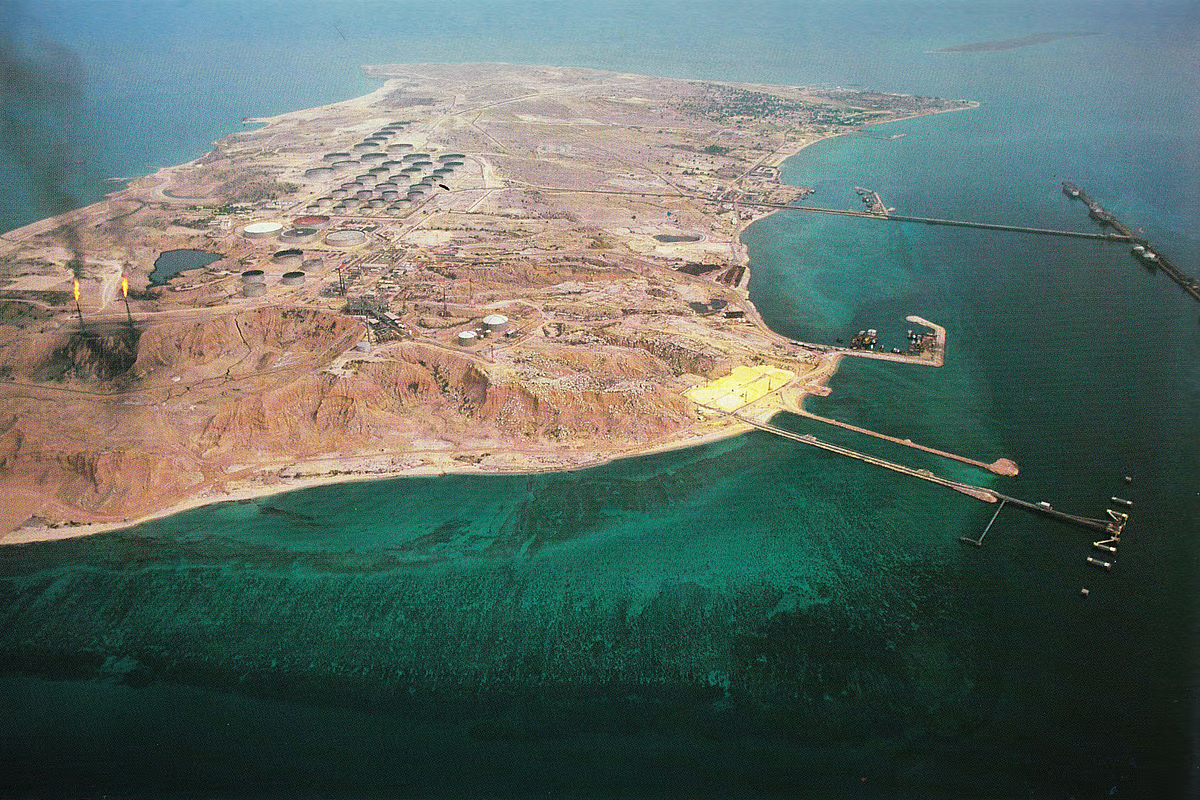
The risk of further escalation, including a potential US ground operation to seize Kharg Island, is sending tremors through financial and energy markets, as well as neighbouring Gulf countries.
In a post on his Truth Social network, Trump voiced hope about US talks with a “more reasonable regime” in Tehran, an apparent reference to new leadership despite the failure of the month-long war to dislodge the Islamic republic.
But Trump warned that if a deal were not struck — including to reopen the vital Strait of Hormuz shipping lane — US forces would destroy “all of their Electric Generating Plants, Oil Wells and Kharg Island (and possibly all desalinization plants!).”
Destroying civilian infrastructure such as power and water facilities would be illegal under international humanitarian law and could constitute a war crime, experts say.
Iran has previously threatened to retaliate by targeting energy infrastructure and desalination plants in its Arab neighbours in the Gulf that host the US military, such as the United Arab Emirates, Oman, Qatar and Saudi Arabia.
Showing it will not back down, an Iranian parliamentary committee voted to impose tolls on vessels through the Strait of Hormuz, the passageway through which one-fifth of global oil passes.
Oil price causes havoc
Economy ministers and central bankers from the G7 club of rich countries met in Paris to discuss the war’s effects, with many countries introducing energy-saving measures or cutting fuel taxes to help consumers.
Market experts warned that any US ground operation or wider Iranian retaliation could send oil prices to levels not seen since the July 2008 commodity boom, when the cost of Brent crude, the international benchmark, hit close to $150 a barrel. Brent has already risen nearly 60 percent this month, and the US benchmark WTI by more than half.
The spectre of a widening conflict grew over the weekend when Iran-backed Houthi rebels in Yemen fired missiles and drones at Israel. The Houthis have previously threatened shipping through the Red Sea and the Suez canal, which requires vessels to travel through a narrow strait off Yemen’s coast.
“The Houthi’s ability to disrupt shipping through the Bab al-Mandeb strait, which accounts for roughly 12 percent of global trade, is the new key risk,” said analyst Chris Weston at the Australian financial services firm Pepperstone.
In Lebanon, Israel continued to bombard Beirut’s southern suburbs and the country’s south, where an airstrike targeted an army checkpoint and killed a soldier.
The United Nations peacekeeping force in south Lebanon, where Israeli and Hezbollah forces are clashing, reported that two of its personnel were killed Monday in “an explosion of unknown origin.” Another peacekeeper was killed on Sunday, with Indonesia confirming one of its soldiers had died.