
Context:
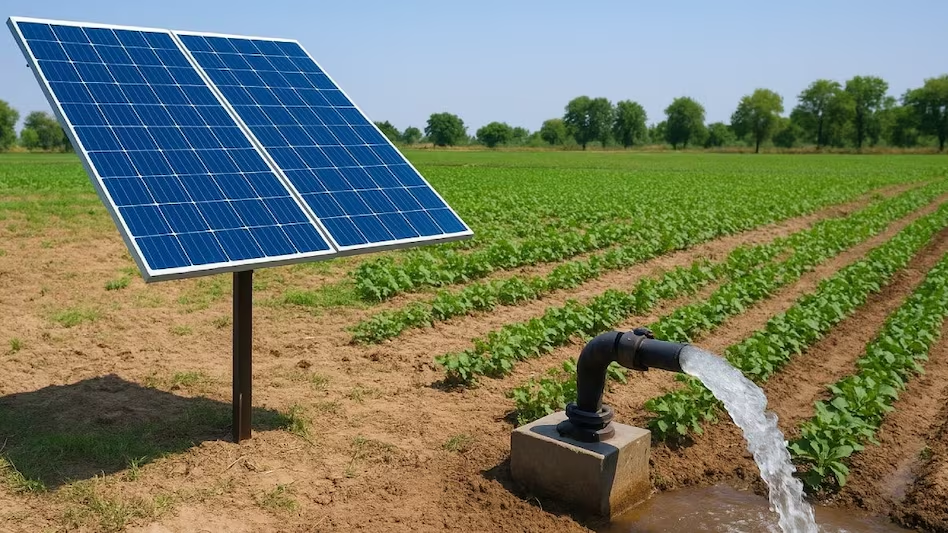
The Centre is planning a revamped version of PM KUSUM scheme with inclusion of battery energy storage. The current scheme launched in 2019 is nearing expiry, prompting policy redesign as PM KUSUM 2.0. Focus is on addressing operational challenges in agricultural power supply.
The Solar Mismatch
The current PM-KUSUM scheme (launched in 2019) focuses on solarizing irrigation pumps. However, it faces a structural challenge:
- The Gap: Solar energy peaks at noon, but agricultural power demand remains steady throughout the day and often persists after sunset.
- The Result: Without storage, surplus power generated at midday is often wasted or strains the grid, while farmers still face power shortages during non-sunny hours.
What’s New in PM-KUSUM 2.0?
The inclusion of batteries will allow farmers to store excess solar energy generated during the day for use in the evening or early morning.
- Storage Debate: The Ministry of Power is pushing for 4 hours of battery backup, while the Ministry of New and Renewable Energy (MNRE) suggests a 2-hour capacity.
- Timeline: The current scheme expires on March 31, 2026. PM-KUSUM 2.0 will subsume existing projects to ensure a smooth transition.
- Financial Closure: Centre extended the deadline for current projects to help stakeholders secure pending bank loans that were stalled due to the scheme’s looming expiration.
Current Progress vs. Targets
While the scheme is a pillar of India’s clean energy transition, the rollout has been slower than the ambitious 34.8 GW target.
| Component | Focus | Status (as of Feb 2026) |
| Component A | Decentralized Solar Plants | 839.4 MW installed |
| Component B | Standalone Off-grid Pumps | Over 10 Lakh pumps installed |
| Component C | Grid-connected Pumps | ~6,637 MW (via 13 Lakh+ feeder pumps) |
| Total Progress | Target: 34.8 GW | Achieved: 12.16 GW |
Benefits of Battery Integration
- Grid Stability: Prevents sudden surges of solar power into the local DISCOM (Distribution Company) grids at noon.
- Farmer Autonomy: Allows irrigation during the night or early morning without relying on the traditional power grid.
- Revenue: Farmers can potentially sell more consistent, stored power back to the grid at a better rate.
PM-KUSUM is a rare “triple-win” scheme, it reduces the subsidy burden on DISCOMs, provides extra income to farmers, and helps meet India’s COP30 climate goals. The 2.0 version addresses the technical “duck curve” (the imbalance between peak demand and renewable supply) which is the biggest hurdle in renewable energy adoption globally.
-
Покердом – Официальный сайт онлайн казино Pokerdom
Покердом – Официальный сайт онлайн казино Pokerdom ▶️ ИГРАТЬ Содержимое Преимущества игры в онлайн-казино Pokerdom Как начать играть в онлайн-казино Pokerdom Шаги для регистрации: Бонусы и акции в онлайн-казино Pokerdom Бонусы для новых игроков Если вы ищете надежный и безопасный способ играть в онлайн-казино, то Pokerdom – ваш выбор. Официальный сайт Pokerdom предлагает широкий спектр…
-
1Win – Official Site for Sports Betting and Casino – Bonus Up to ₹100,000
1Win – Official Site for Sports Betting and Casino – Bonus Up to ₹100,000 ▶️ PLAY Содержимое Why Choose 1Win for Your Gaming Needs? Why 1Win Stands Out from the Crowd How to Get Started with 1Win and Claim Your Bonus Claim Your Bonus Are you ready to take your gaming experience to the next…
-
Пинко казино – Официальный сайт Pinco Casino вход на зеркало
Пинко казино – Официальный сайт Pinco Casino вход на зеркало ▶️ ИГРАТЬ Содержимое Пинко казино – Официальный сайт Pinco Casino Преимущества Pinco Casino Вход на зеркало Pinco Casino Преимущества и функции официального сайта Pinco Casino Если вы ищете официальный сайт Pinco Casino, то вы на правом пути. В этом тексте мы рассмотрим, как найти зеркало…